
Aquatic Therapy
Aquatic Therapy is a specialised, transformational intervention that harnesses the unique properties of water to support people, usually children with additional needs, who live with physical, developmental, sensory, neurological or behavioural challenges.
Informed implementation has the potential to enhance:
• Self confidence.
• Self regulation.
• Mood and attitude.
• Independence.
• Physical capacity on land.
• Psychological resilience.
• Lifelong water safety.
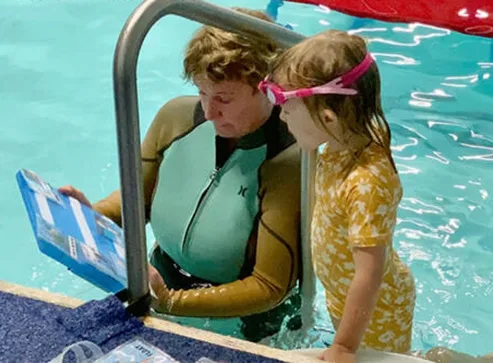
Aquatic Therapy is a hybrid methodology.
Neither hydrotherapy (for medical intervention, rehabilitation after injury, pain relief or mobility enhancement) nor swim lessons (to teach individuals safe and efficient propulsion in water, emphasising the mastery of swimming skills and possible competitive involvement as a sport).
Aquatic Therapy utilises controlled, warm water environments as a therapeutic tool to advance objective, allied health goals and to ensure purposeful self-propulsion (whatever that may look like) and water safety. It combines knowledge, skills and insights from both the allied health and education fields.
The best outcomes occur when a collaborative and interdisciplinary approach is taken to help empower and enable children, families and carers. Sustained parental and carer engagement generally improves outcomes for the child.
Aquatic Therapy is best delivered in a sequential, regular, structured, engaging and adaptable program.
Results are tracked and monitored using well-established allied health methodologies.
New participants are generally referred by allied health professionals or via word of mouth.
If you would like to chat about your child and share your circumstances, please book a FREE ’15 mins for YOU’. We’ll explore how we may be able to support you best.
What was it?
Aquatic Therapy consists of targeted sessions, leveraging water’s resistance, buoyancy, sensory qualities, and specialised equipment to enhance physical, cognitive, social, and emotional development. This intervention is typically delivered one-on-one and personalised to the client’s specific allied health goals.
Why does it matter now?
Many children and adults with neurodevelopmental differences, sensory challenges, or low muscle tone are drawn to water, yet might lack safety awareness. This is significant: for example, children with Autism Spectrum Disorder are 160 times more likely to drown than peers. Aquatic therapy addresses these risks while delivering profound improvements in self-regulation, focus, mood, and daily living skills—benefits that may be more challenging to achieve on land.
There is an urgent demand globally for therapies that are efficient, engaging and enjoyable and that can be delivered in formats that are financially sustainable for parents, carers and government supported health systems.
Why it works
Water’s physical properties—buoyancy, resistance, warmth, and hydrostatic pressure—create a unique, supportive environment that enhances proprioception (body awareness), encourages relaxation, and makes movement safer for those with mobility or sensory issues. Water provides up to 30 times more proprioceptive input than land, supporting attention, strength, coordination, and motor planning. Therapy sessions often utilise visual schedules, sensory toys, floating mats, dumbbells, wrist/ankle weights, noodles, and picture boards to ensure each session is engaging, structured, and attuned to individual goals.
Who Is Aquatic Therapy Suitable For?
Aquatic therapy can benefit children and adults with:
• Autism, ADHD, sensory processing differences
• Developmental Delays, Low Muscle Tone
• Physical Disabilities, Mobility Challenges
• Anxiety, Behavioral Challenges
• Those seeking improvements in coordination, Strength, Focus and Safe Water Behavors
SAMPLE AQUATIC THERAPY SESSION
Assessment & Goal Setting
Identify goals (safety,aIdentify goals (safety, motor skills, communication) motor skills, communication)
Warm-Up (5-10 min)
Gentle movements to build comfort in water
Motor Skill Development
Activities using dumbbells, noodles, mats; focusing on core strength, coordination
Sensory Integration
Use sensory toys, floating mats, picture boards to promote engagement
Communication & Social Skills
Structured interaction, visual schedules, and group activities
Safety Instruction & Practice
Teaching water safety, consent, and hazard awareness
Cool-Down & Reflection
Calm activities accentuating self-regulation, session review
Common Supportive Equipment
Session might use
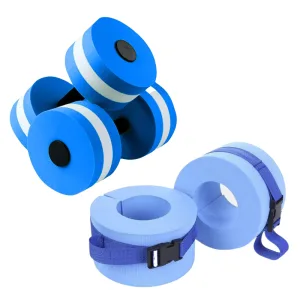
DUMBELLS, WRIST / ANKLE WEIGHTS
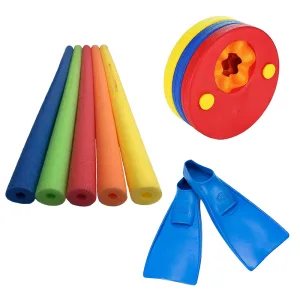
FOAM DISCS, NOODLES, FLIPPERS
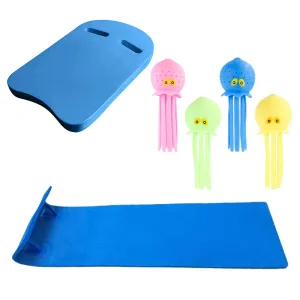
SENSORY TOYS, BALLS, FLOATING MATS, PICTURES BOARDS
Testimonials



Copyright © 2025 Aquatic Mentors